Clinic Journal·Laser & IPL

Laser skin resurfacing vs IPL

Which treatment is used for pigmentation, sun damage and skin texture? We explain how each one works, and how we decide which is right for you.
By Helen Hunt RGN INP
Founder & Level 7 Advanced Nurse Prescriber7 min read
UltraClear laser resurfacing compared with IPL skin rejuvenation

If you’ve started looking into treatments for sun spots or uneven skin, you’ve probably come across a long list of options: IPL, laser skin rejuvenation, fractional resurfacing, and a host of branded technologies, each promising clearer skin. It can be hard to know what any of them actually mean, let alone which one is right for you.

Some of these treatments help with similar concerns, but they work in different ways and at different levels of the skin. That’s why, at Helen Hunt Medical Aesthetics, we offer two different technologies: UltraClear®, our new laser resurfacing treatment, and UltraLUX PRO, which includes IPL. Having both means we can choose the approach that best suits your skin, your concerns, and your goals.

What does “skin resurfacing” actually mean?

Skin resurfacing renews the skin by removing damaged cells from its surface, encouraging fresh, healthier skin to form as it heals.

Modern “fractional” resurfacing treats the skin in thousands of tiny, precise zones rather than all at once. The untouched skin in between helps it recover more quickly. As well as renewing the surface, this healing process encourages the skin to produce new collagen over the following months.

UltraClear® takes this a step further by offering two levels of treatment in one laser:

  • 3DMIRACL® — a superficial refresh for glow and early sun damage.
  • UltraClear® — a moderate treatment that works deeper in the skin.

Rather than one fixed intensity, your treatment can be tailored to what your skin needs.

What is IPL skin rejuvenation?

IPL stands for Intense Pulsed Light. Rather than a single laser beam, it uses a broad spectrum of light that is absorbed by pigment (melanin) and by the tiny blood vessels in the skin. This gently heats and breaks down unwanted pigment and redness, without removing the skin’s surface. Treated brown spots often darken slightly, then naturally flake away over the following week or two.

Our UltraLUX PRO platform uses IPL to treat pigmentation and sun damage, redness and rosacea, and general skin rejuvenation. It is usually carried out as a course of treatments, with minimal downtime.

So, what’s the difference between IPL and UltraClear®?

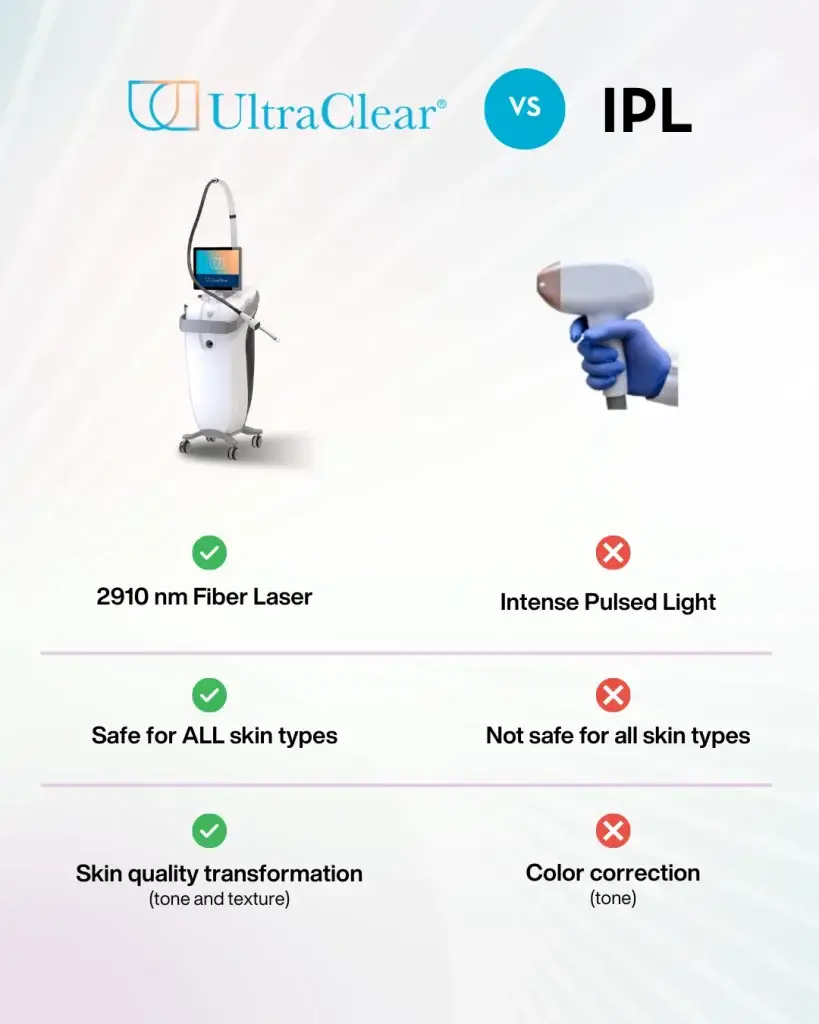
In short, UltraClear® is a skin-resurfacing laser, while UltraLUX PRO is a multi-technology platform that gives us IPL alongside several other treatments, including laser hair removal and radiofrequency. Here’s how the two compare for skin rejuvenation:

UltraLUX PRO (IPL)
UltraClear®
Type of treatment
Intense pulsed light
Cold fibre laser resurfacing
How it works
Light targets pigment and redness beneath an intact surface
Precise laser zones renew the skin and encourage collagen
Often used for
Sun spots, freckling, redness, rosacea, general rejuvenation
Sun damage, pigmentation, uneven texture, fine lines, scarring
Resurfaces the skin?
No
Yes
Treatment intensity
Adjusted to your skin, usually as a course
Two levels, from a light refresh to a deeper, moderate treatment
Recovery
Minimal; mild redness, and spots darken before flaking
From minimal up to around five days, depending on the level
Skin types
Best suited to lighter skin types
Suitable for all skin types, with settings tailored to you
Where
Available at our clinics
Exeter clinic only

When might UltraClear® be considered?

Sun damage and pigmentation

Years of UV exposure build up in the skin, showing as brown spots, freckling and a generally uneven or dull tone. IPL can work well for pigment on its own. However, when sun damage has also affected the texture and quality of the skin, resurfacing can treat both at the same time. UltraClear® removes damaged surface cells while encouraging fresh skin to form, helping to reveal a clearer, more even complexion.

Uneven texture and skin quality

Rough, uneven or congested-looking skin is often a sign that the skin’s natural renewal has slowed down. Because IPL works beneath the surface, it isn’t designed to change skin texture. UltraClear® resurfaces the skin, smoothing its surface and helping to refine the look of enlarged pores. Many people find their skin looks and feels smoother within a couple of weeks.

Scarring

Scarring isn’t simply a colour change. It alters the structure of the skin, leaving dips, pits or uneven areas, so it needs a treatment that works on texture and collagen rather than one aimed only at pigment or redness. UltraClear® can be set to work deeper in the skin, encouraging it to rebuild and gradually softening the appearance of scarring over a course of treatments.

Fine lines and signs of ageing

Resurfacing can improve visible fine lines and crepey skin at the surface, while also encouraging longer-term collagen renewal beneath it. Collagen continues to rebuild for around three to six months after treatment, so results tend to keep improving over time.

What makes UltraClear® different from traditional laser resurfacing?

Traditional resurfacing lasers rely on heat, which can mean more discomfort, a longer recovery and, for some skin types, a higher risk of pigment changes.

UltraClear® is the world’s first cold ablative fractional fibre laser. It works at a 2,910nm wavelength, which is very strongly absorbed by the water in the skin. This allows it to treat the skin precisely while sending far less heat into the surrounding tissue.
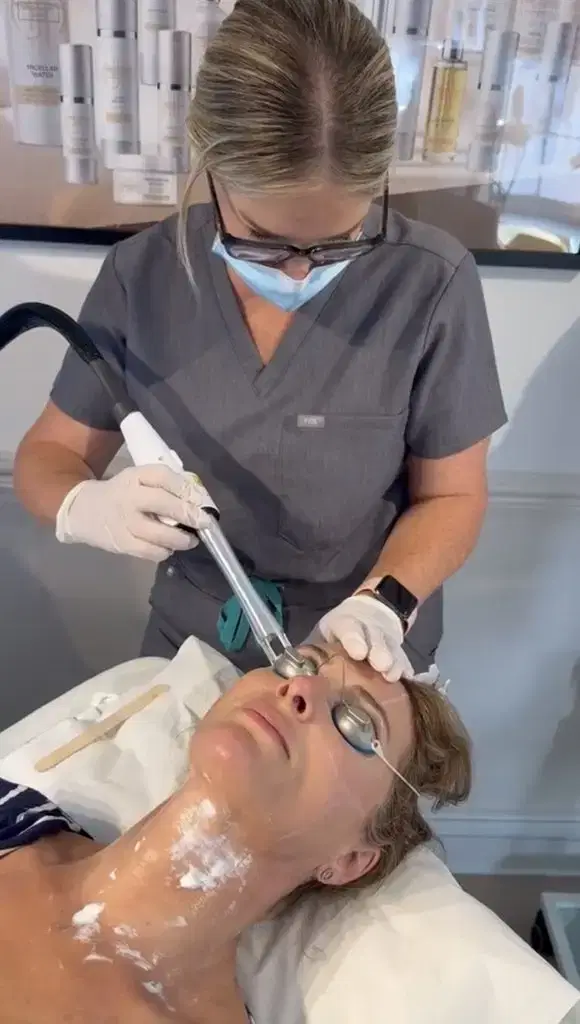
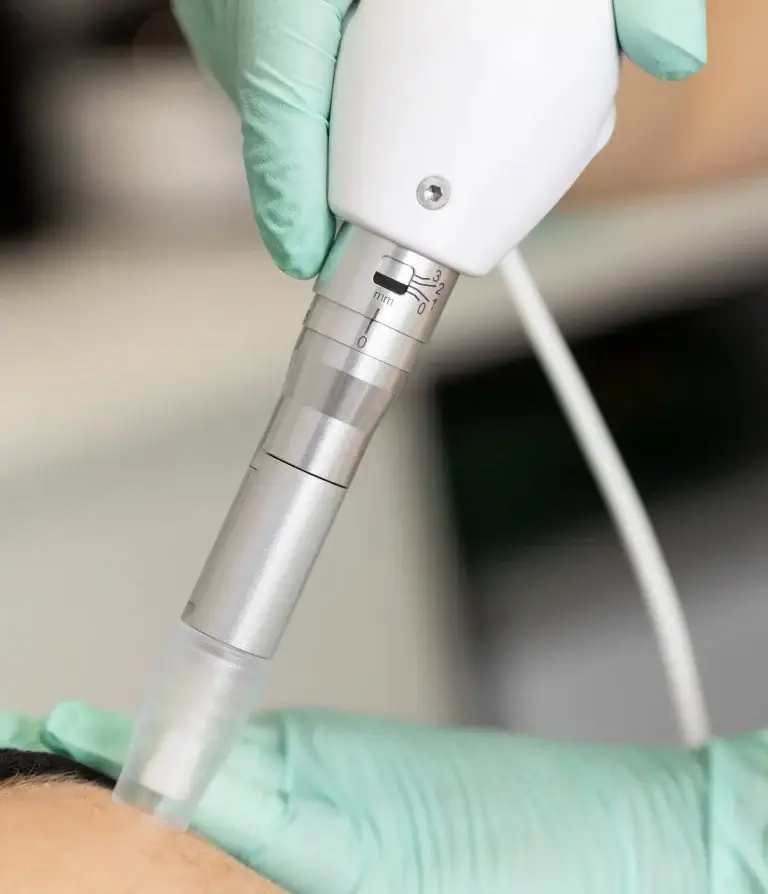
UltraClear laser treatment at Helen Hunt Medical Aesthetics
UltraClear® treatment at our Exeter clinic.

That’s why it can be used across all skin types, and why treatments are typically more comfortable — lighter treatments often need no numbing cream at all. In UltraClear’s patient data, people having the lightest treatment, 3DMIRACL®, rated their discomfort at an average of 1.75 out of 10.

Named Best Laser Treatment for All Skin Tones in the NewBeauty Awards 2023, 2024 and 2026.

Does laser resurfacing always mean lots of downtime?

Not necessarily. Because UltraClear® can be used at different intensities, recovery depends on the level of treatment chosen:
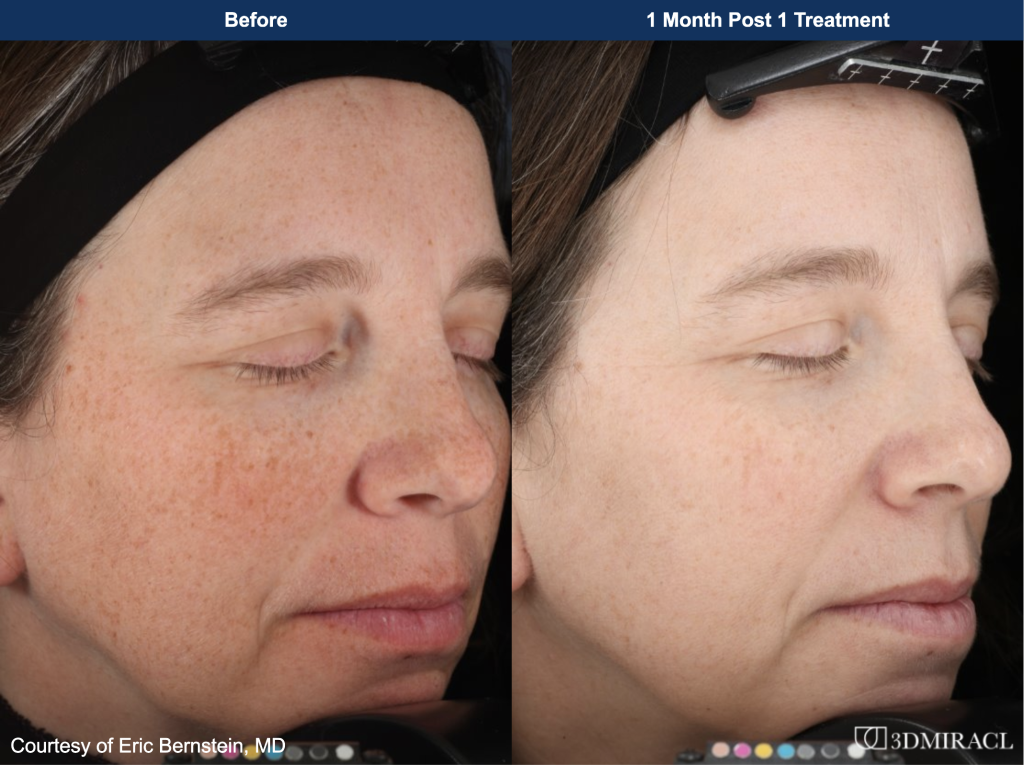
  • 3DMIRACL® — minimal downtime, perhaps a little pinkness. Most people carry on with their day.
  • UltraClear® (moderate) — typically three to five days of redness and mild swelling. Most people are comfortable wearing make-up and tinted SPF from around day four or five.
Before and after a 3DMIRACL light laser resurfacing treatment
Before and after 3DMIRACL®. Results vary from person to person.

We’ll always talk you through what to expect, so you can plan your treatment around your life.

Which treatment should I choose for pigmentation or sun-damaged skin?

There isn’t one right answer for everyone. The best option depends on what is causing your pigmentation, whether texture or scarring is also a concern, your skin type, the result you’re hoping for, and how much downtime feels manageable.

For example, IPL may be ideal for sun spots and redness on otherwise smooth skin, while UltraClear® may be more suitable when pigment, texture, and fine lines all need attention, or for deeper skin tones. Some types of pigmentation, such as melasma, need particularly careful consideration.

That’s why every patient starts with a consultation with one of our experienced practitioners, including a patch test where needed, so we can recommend the treatment that’s right for you.

Frequently asked questions

Is UltraClear® the same as IPL?

No. IPL uses broad-spectrum light to target pigment and redness beneath the skin’s surface, while UltraClear® is a laser that resurfaces the skin. Each suits different concerns, and we offer both.

Is UltraClear® the same as a CO2 laser?

UltraClear® is the latest generation of resurfacing technology and a step on from traditional CO2 lasers. CO2 lasers rely on heat, which can mean a longer, more uncomfortable recovery and a higher risk of pigment changes, particularly in darker skin. UltraClear® uses cold fibre laser technology to resurface the skin with far less heat, so it can deliver excellent results with much less downtime.

Can UltraClear® treat pigmentation?

Yes. UltraClear® can help improve sun damage, age spots, and uneven skin tone by renewing the skin’s surface. Some types of pigmentation, such as melasma, need careful consideration, so we’ll always check what’s right for you at your consultation.

Can UltraClear® help with scarring?

Yes. UltraClear® can be set to work deeper in the skin, encouraging collagen renewal and gradually improving the texture of scarring. Most people benefit from a course of treatments.

Is UltraClear® suitable for darker skin tones?

Yes. UltraClear® treatments are suitable for all skin types. Because it works with far less heat than traditional lasers, the risk of heat-related pigment changes is reduced, and we’ll always tailor the settings carefully to your skin.

How much downtime is there after laser skin resurfacing?

It depends on the treatment level. With UltraClear®, it ranges from minimal downtime for a light refresh to three to five days for moderate treatments.

In summary

The right treatment, tailored to you

Introducing UltraClear® at Helen Hunt Medical Aesthetics gives us more ways to help with pigmentation, sun damage, uneven texture, fine lines and scarring.

With UltraClear® and UltraLUX PRO side by side, we’re not limited to a single approach. Instead, we can tailor your treatment to your skin, your goals and your lifestyle, always with our focus on safe, natural-looking results. UltraClear® is available at our Exeter clinic.